Type
Renovation & Residential
Location
İstanbul
Year
2025
Status
Completed
Collabration
Nesin Kolektif
Photographs
Merve Yumuk Photography
"Preserving and Documenting Traces of Spatial Memory Through Architecture"
The project is located in Kurtuluş, Şişli, one of Istanbul’s layered and quietly evolving neighborhoods. Tucked away at the end of a dead-end street, the apartment sits on the second basement level of an existing building, opening directly onto a small backyard. The flat belongs to the Nesin Foundation, which acquired it from Gönül Sabuncu, a long-time supporter whose name the project now carries.
From the outset, the project was shaped by a simple but demanding question: how can a new way of living be introduced without erasing the traces of those who lived there before? Closely tied to this was a second concern, what kind of architectural language can hold together both memory and transformation?
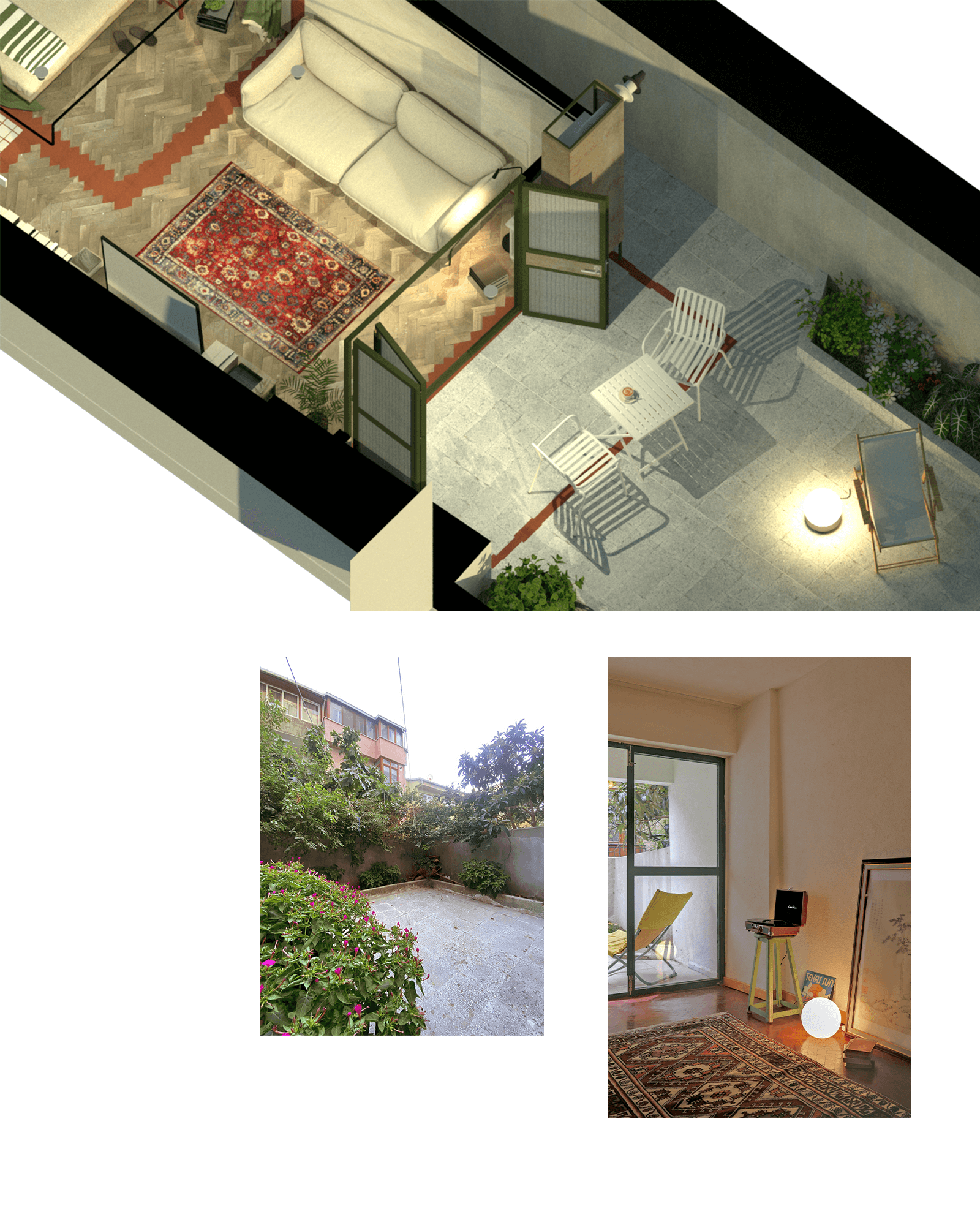
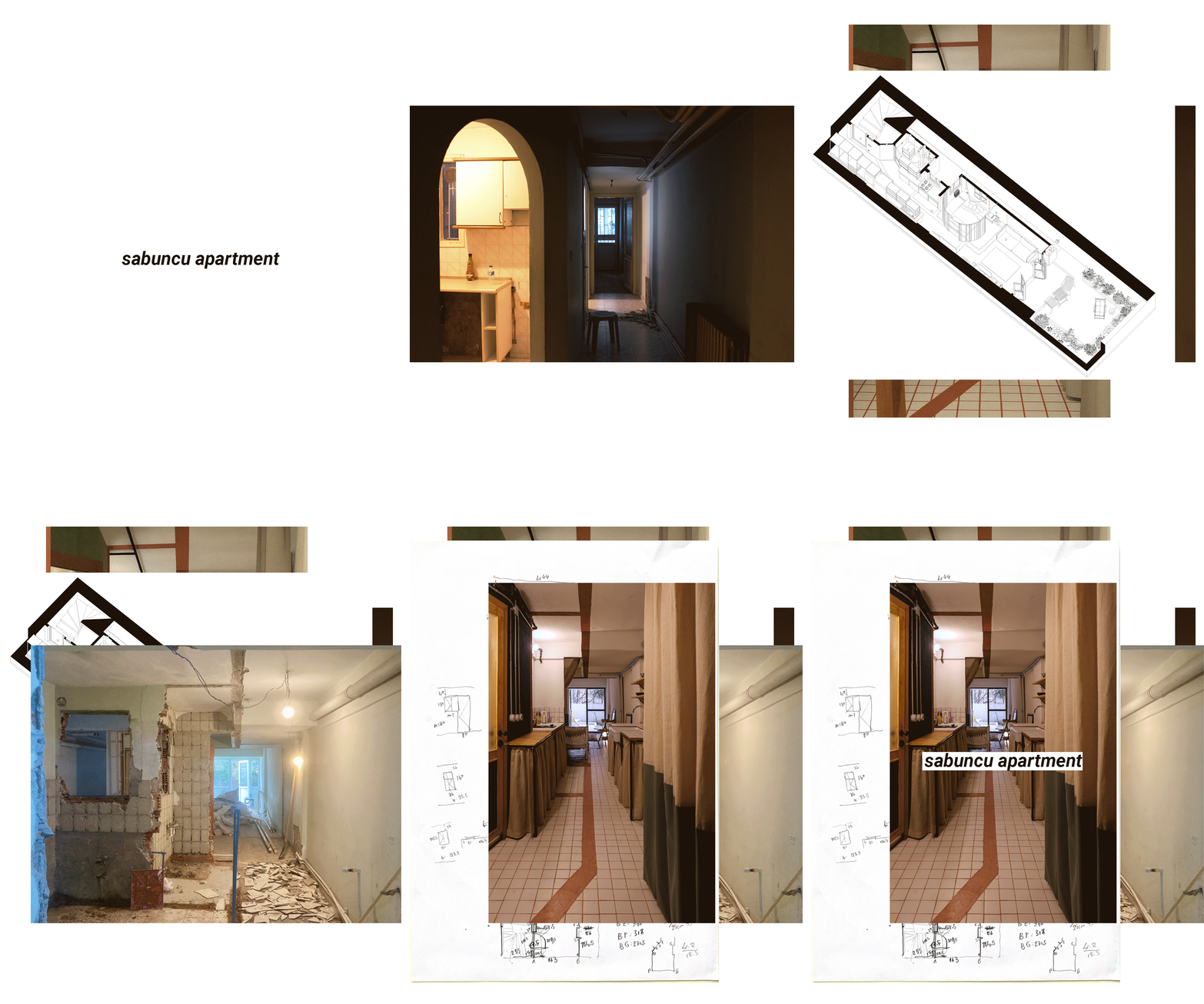
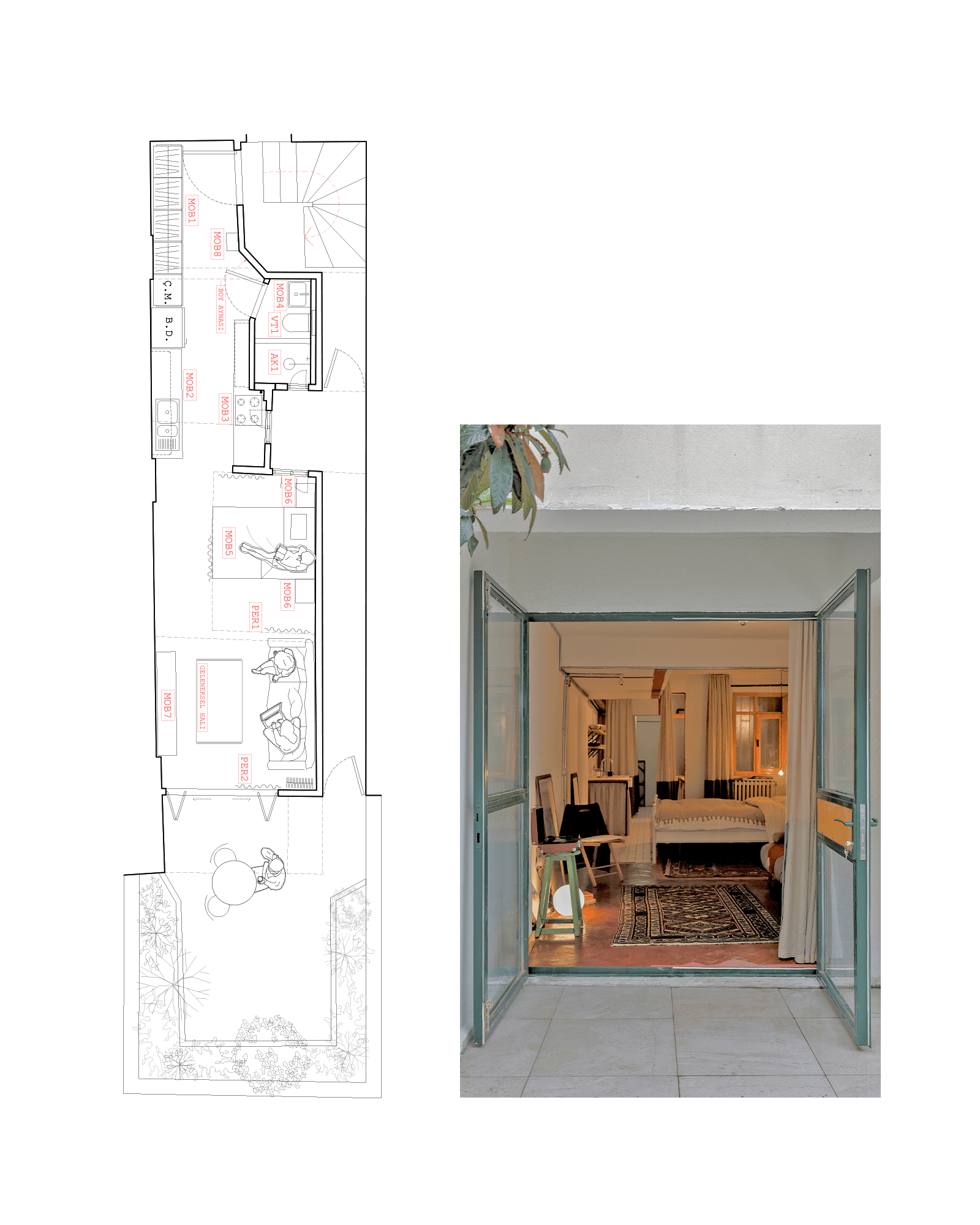
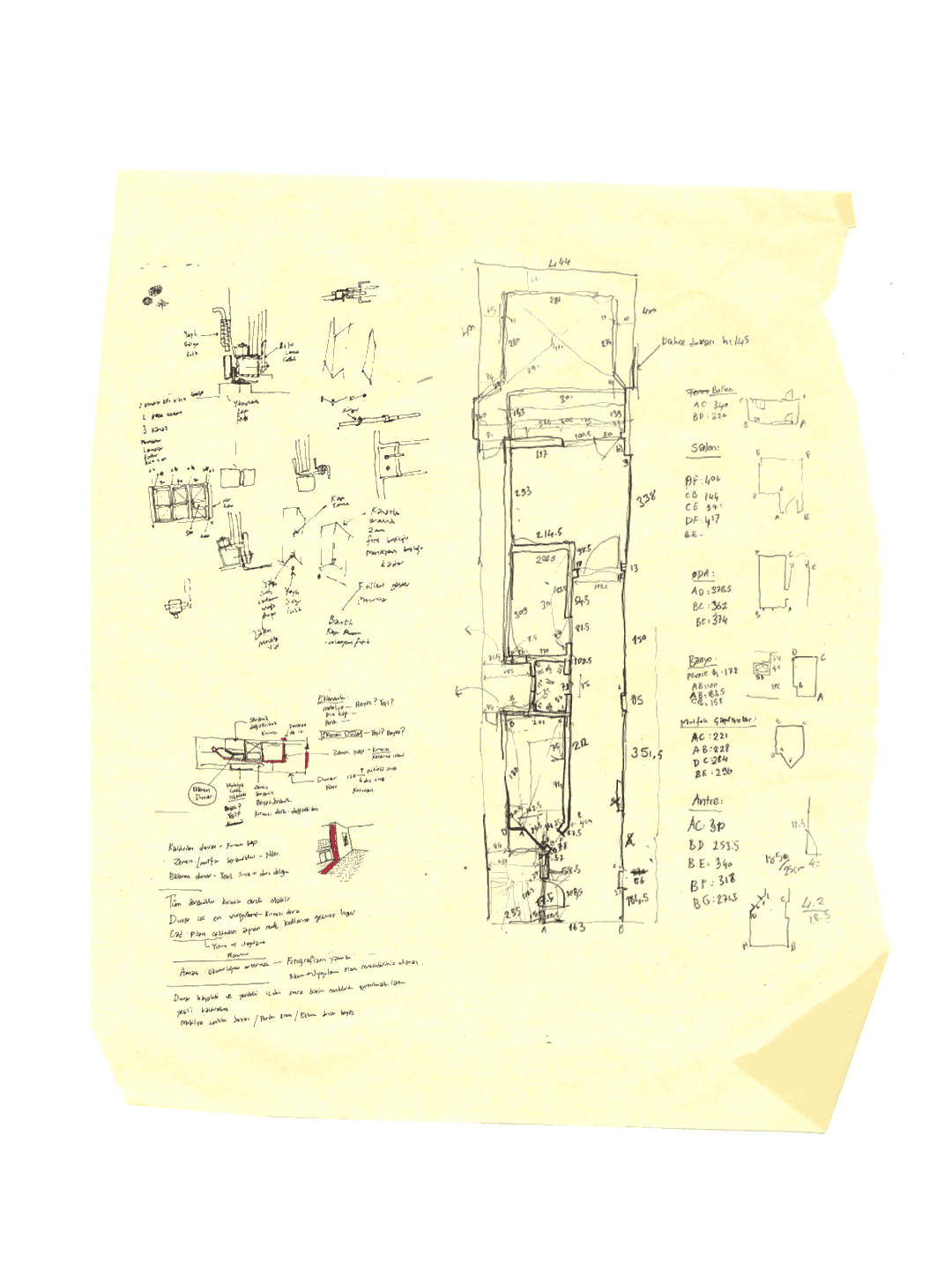
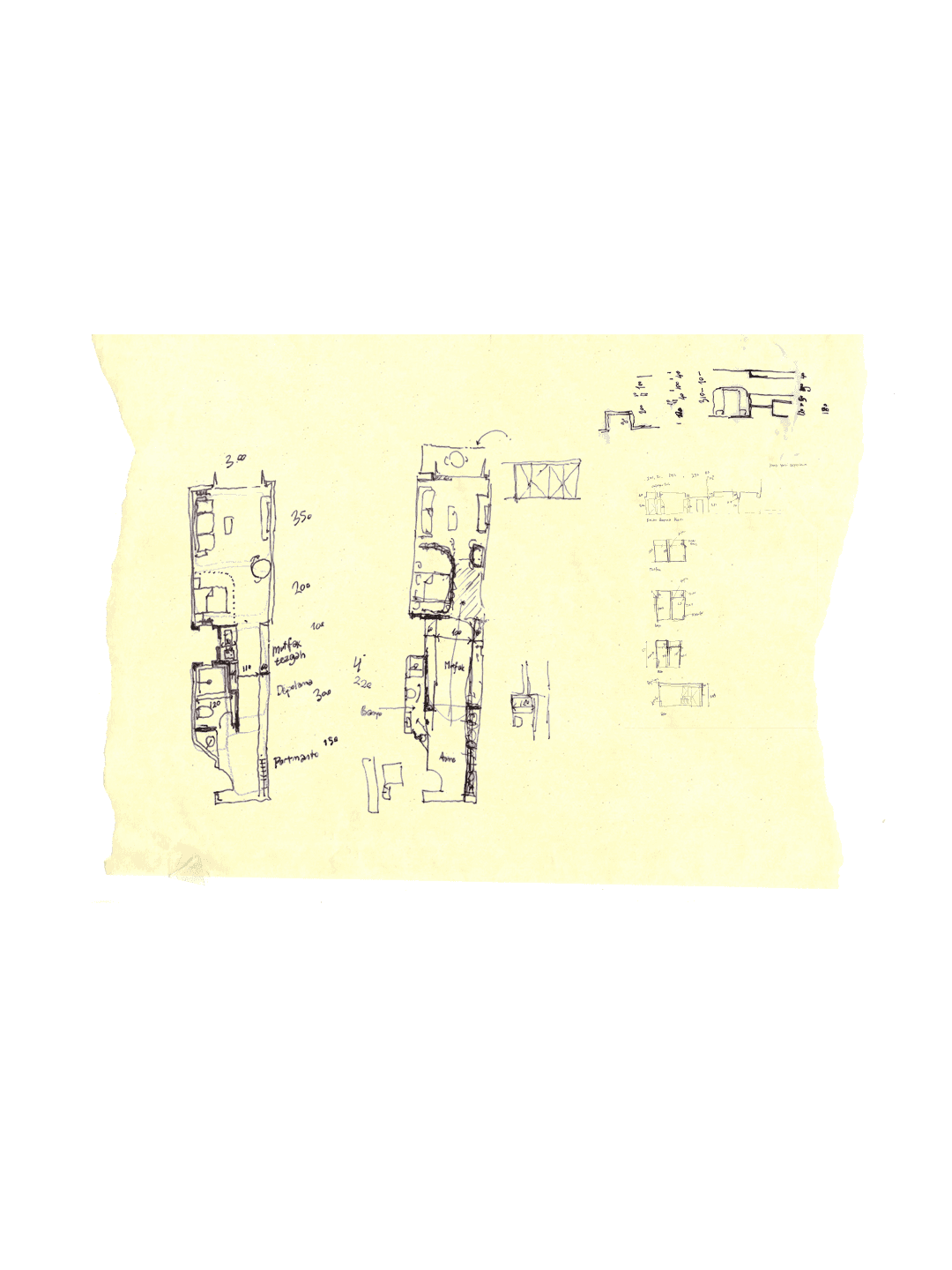
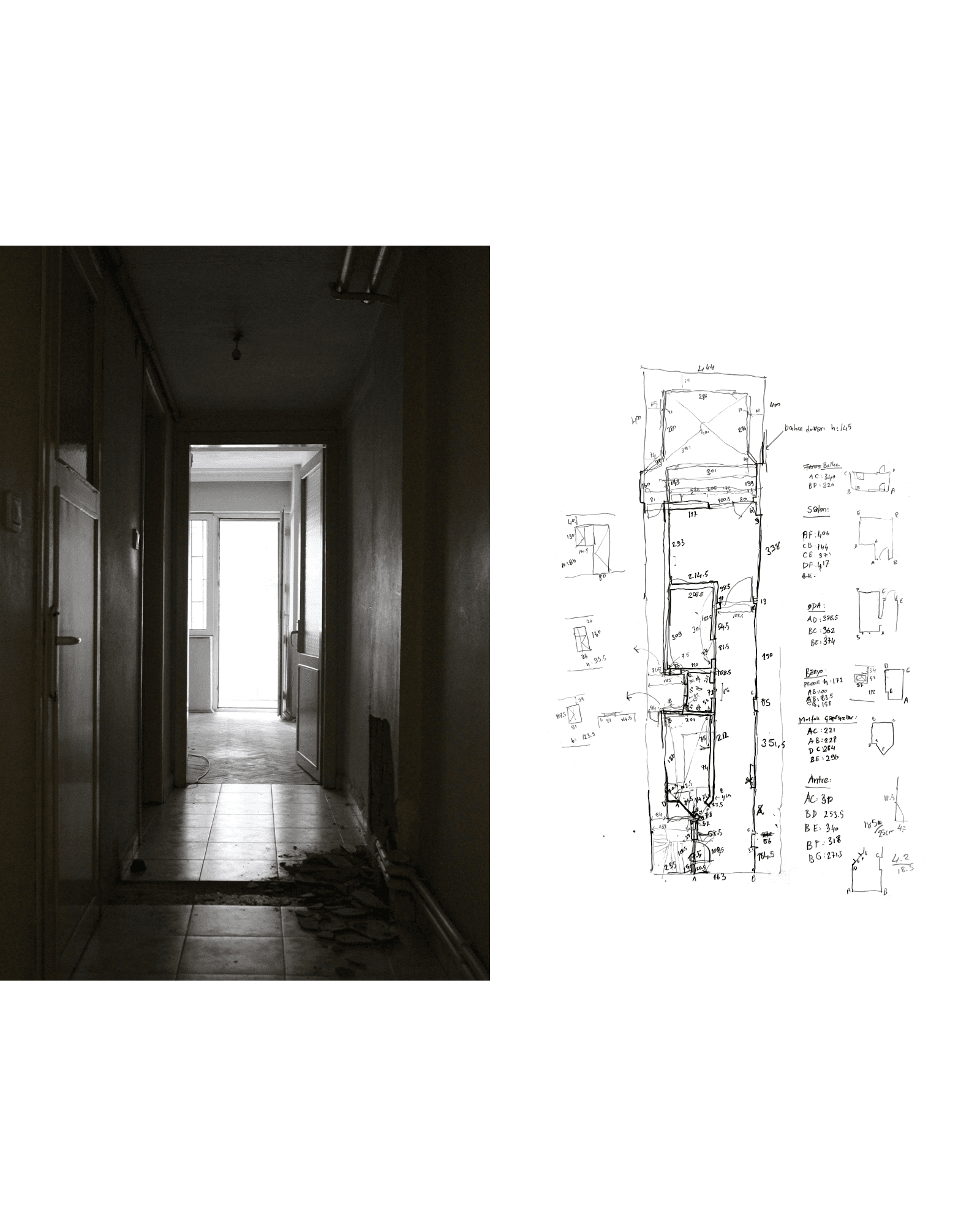
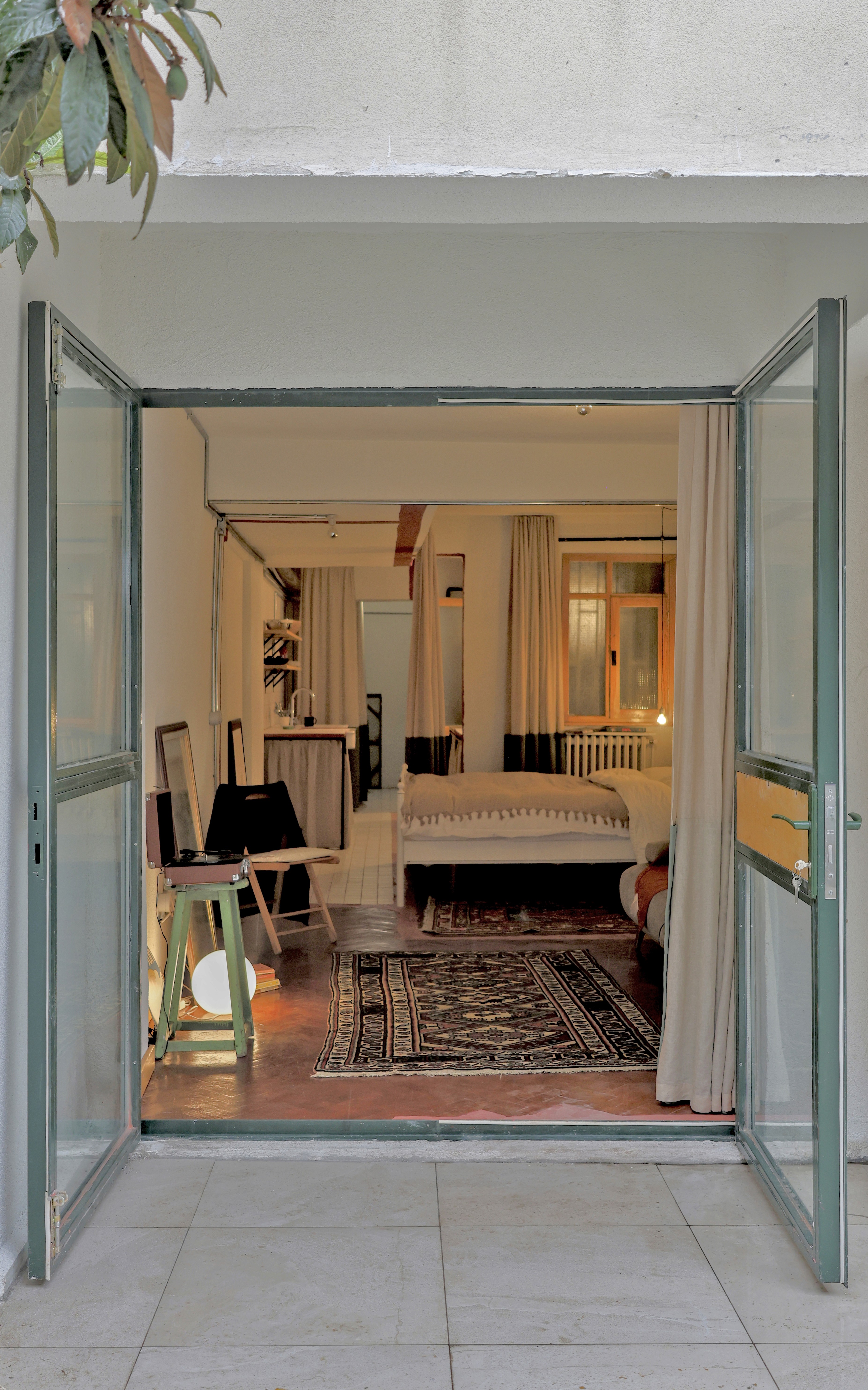
Measuring only 35 square meters, the flat was most likely originally designed as a caretaker’s unit. Its plan was deeply inefficient: a narrow corridor consumed a significant portion of the space, while the living room, bedroom, and bathroom were compressed into dimensions that were difficult to inhabit. Yet, despite these limitations, the apartment possessed a rare quality, a direct relationship with a private garden facing the inner courtyard.
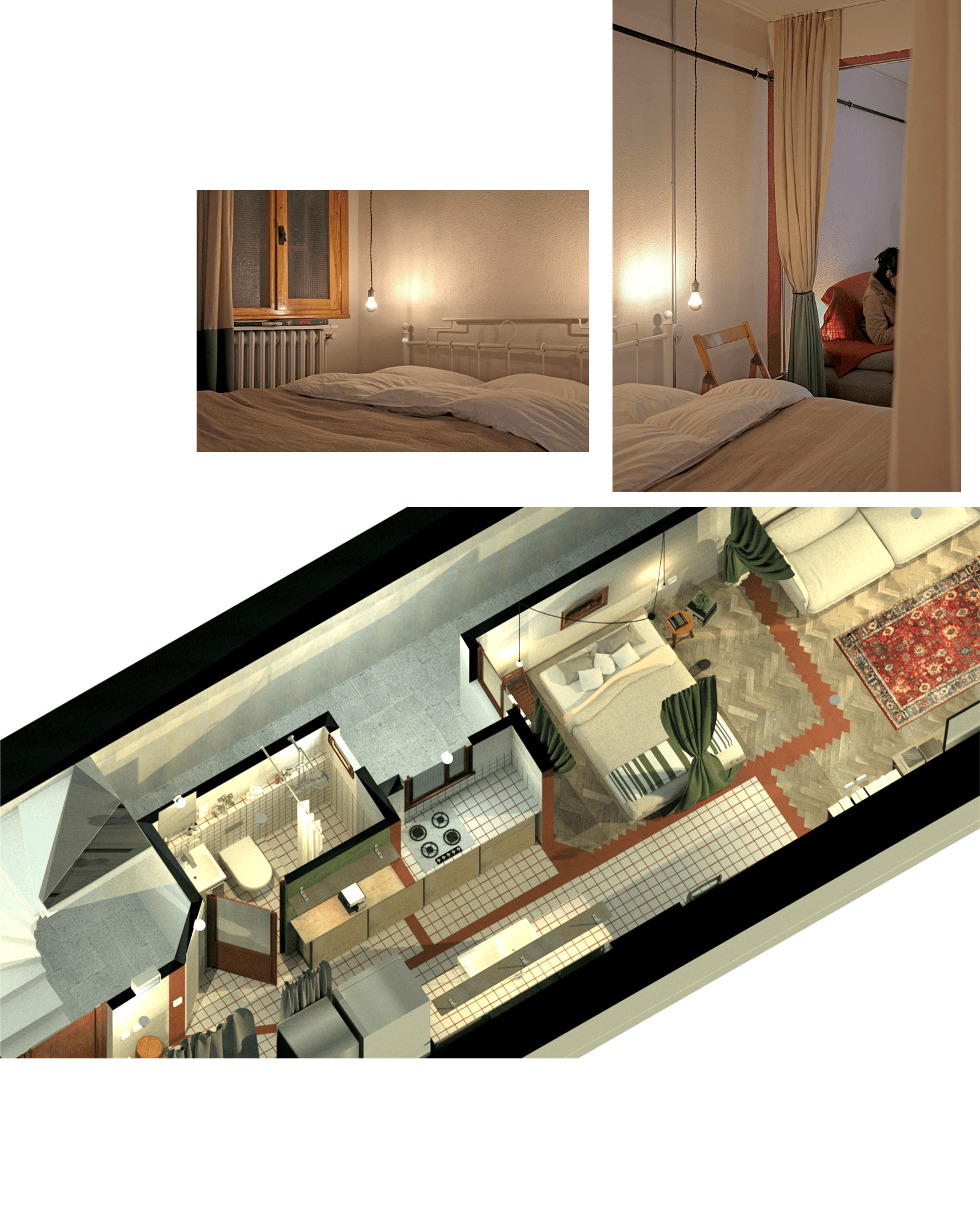
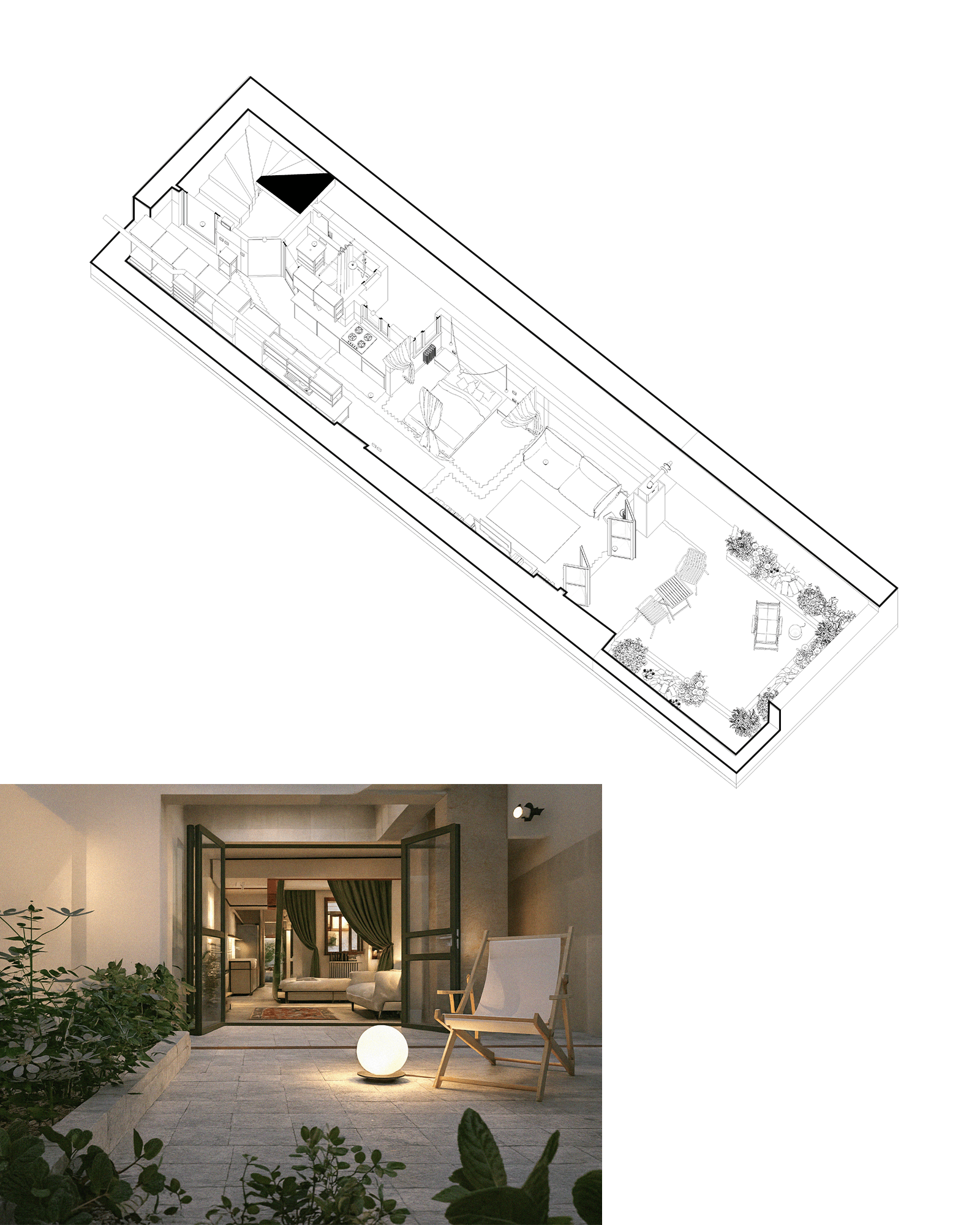
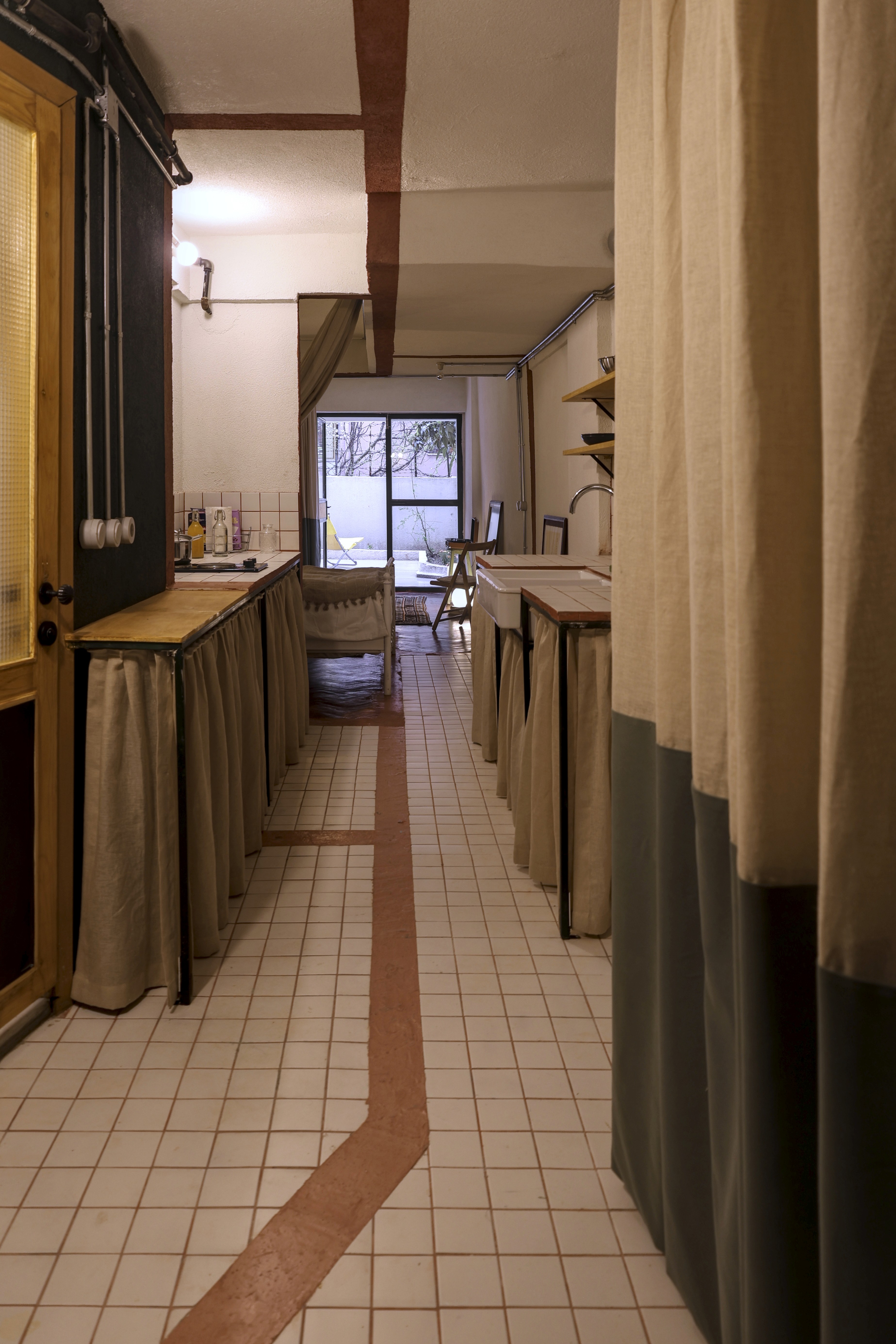
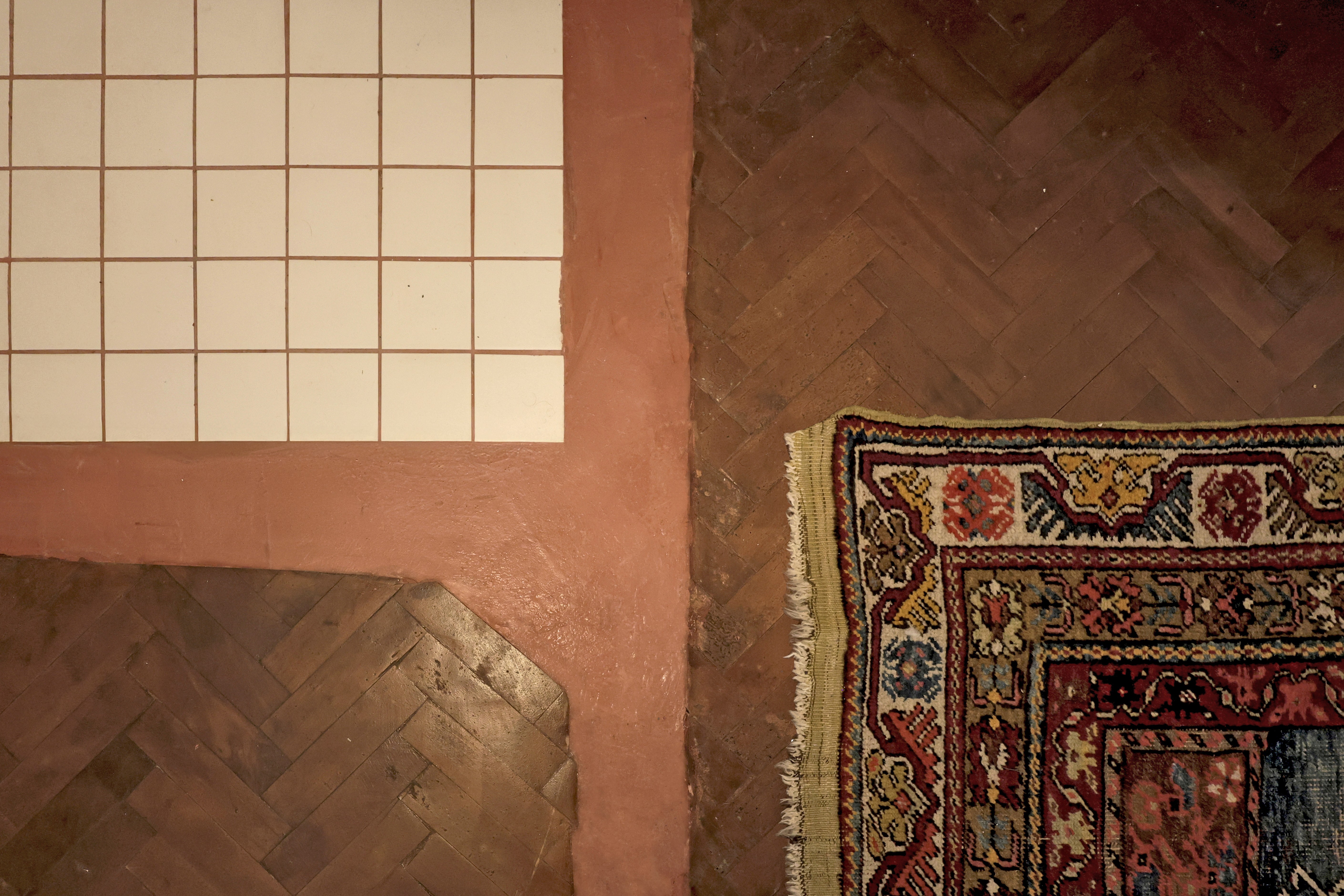
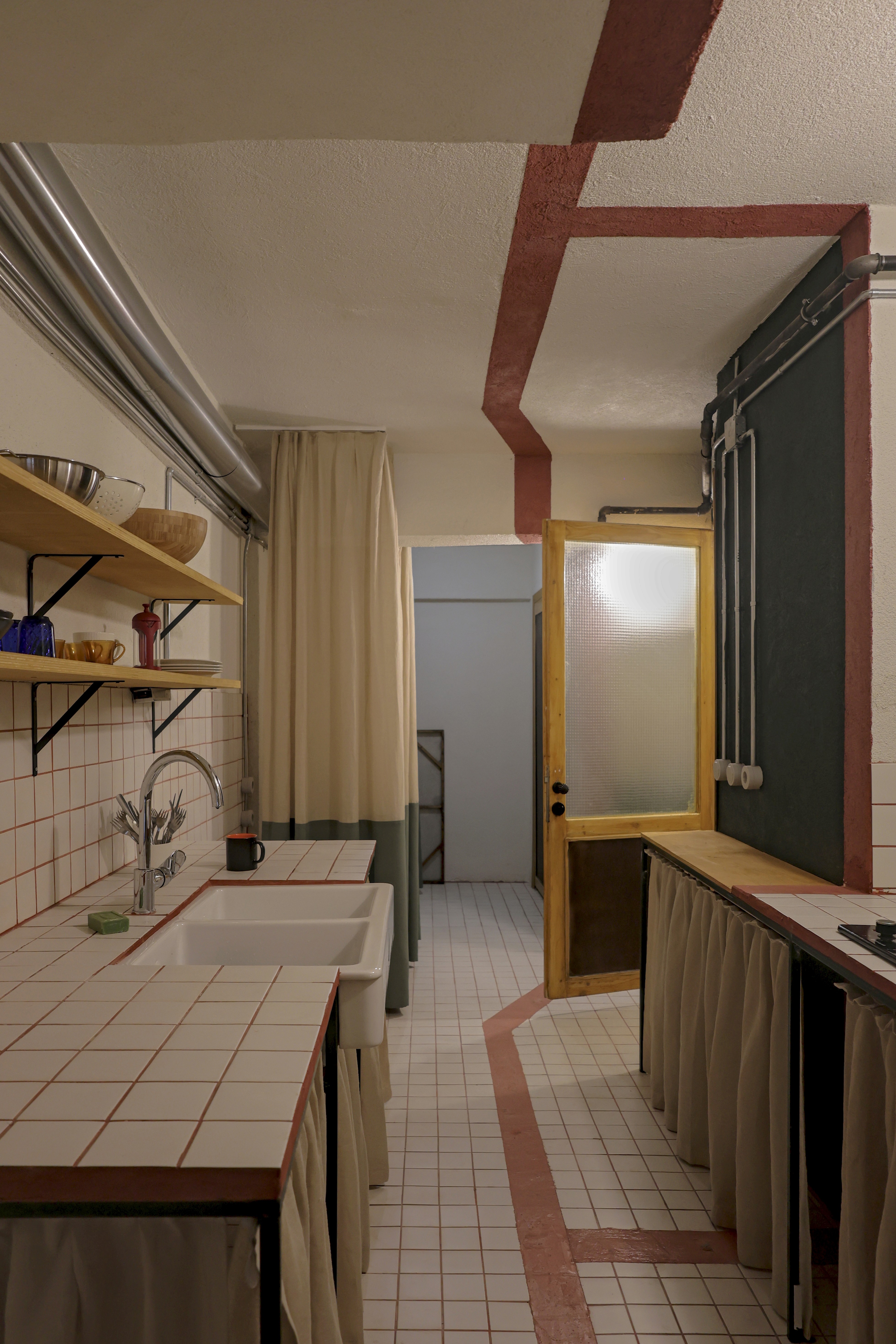
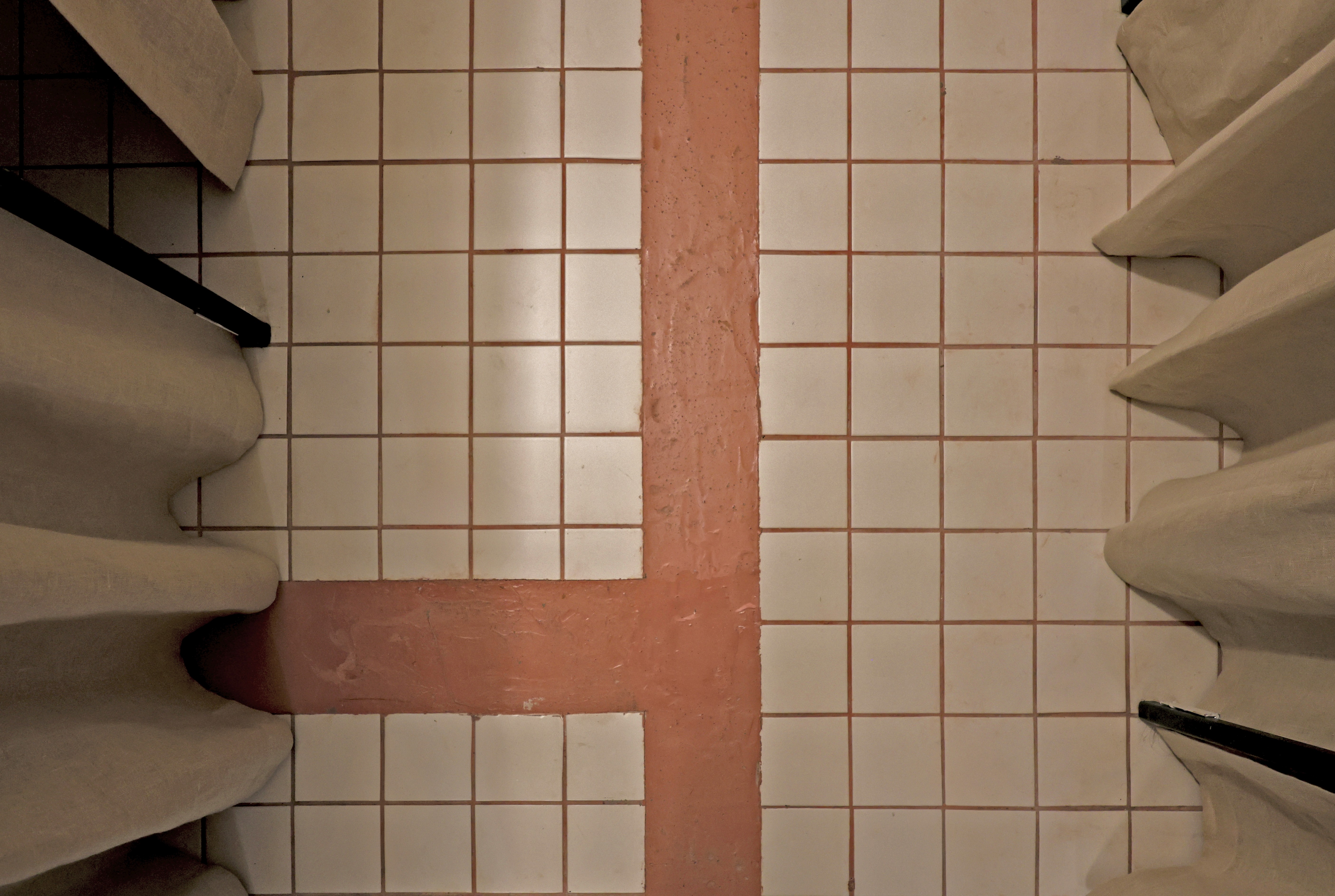
Rather than treating the renovation as a clean slate, the project approaches architecture as a form of documentation. All internal partitions were removed to open up the plan, allowing for a more flexible and coherent spatial organization. At the same time, what was removed was not forgotten. Inspired by restoration practices, the project adopts a simple yet precise system: elements that have been removed are marked in red, while new interventions are marked in green. In this way, the past is not hidden, but made readable.
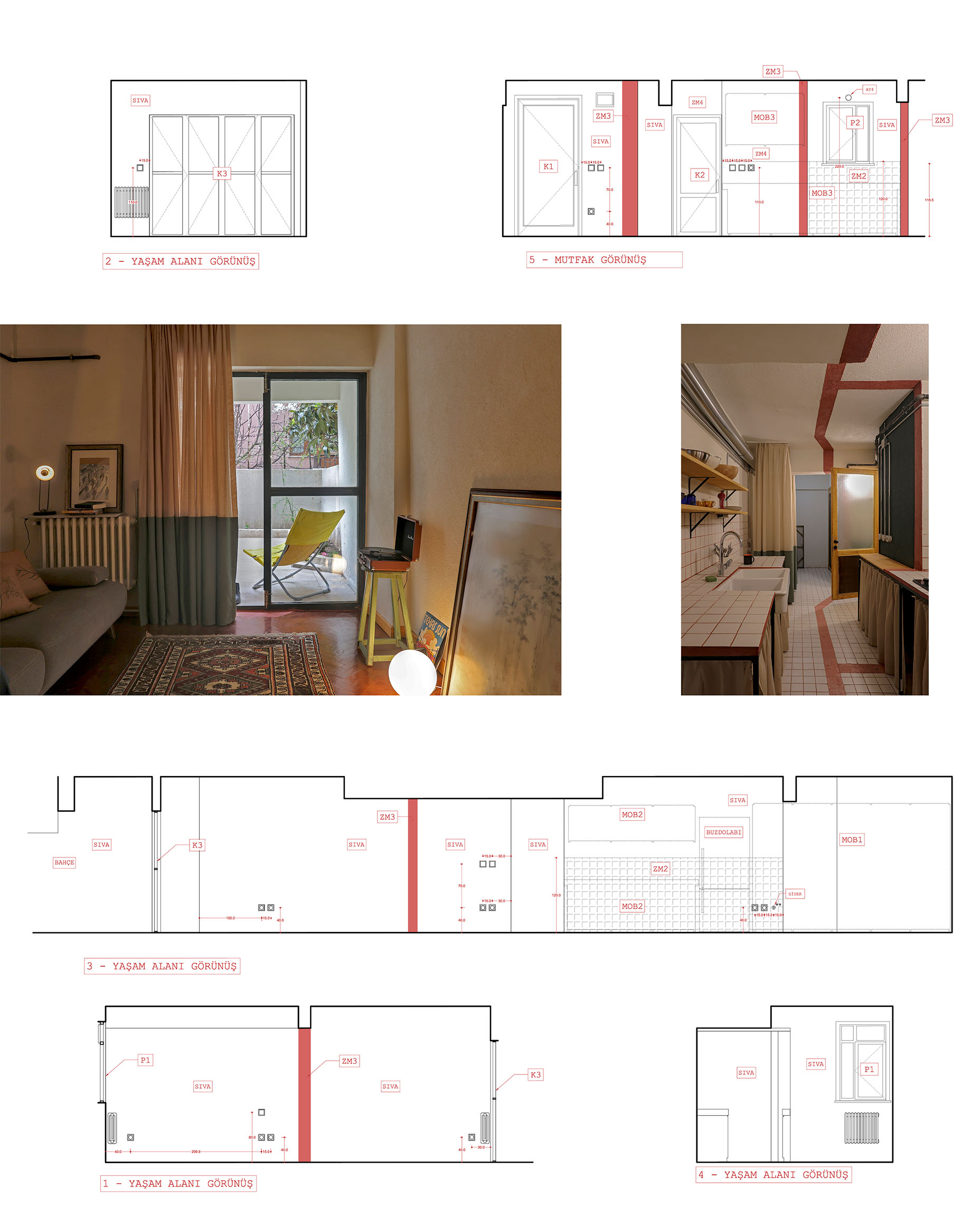
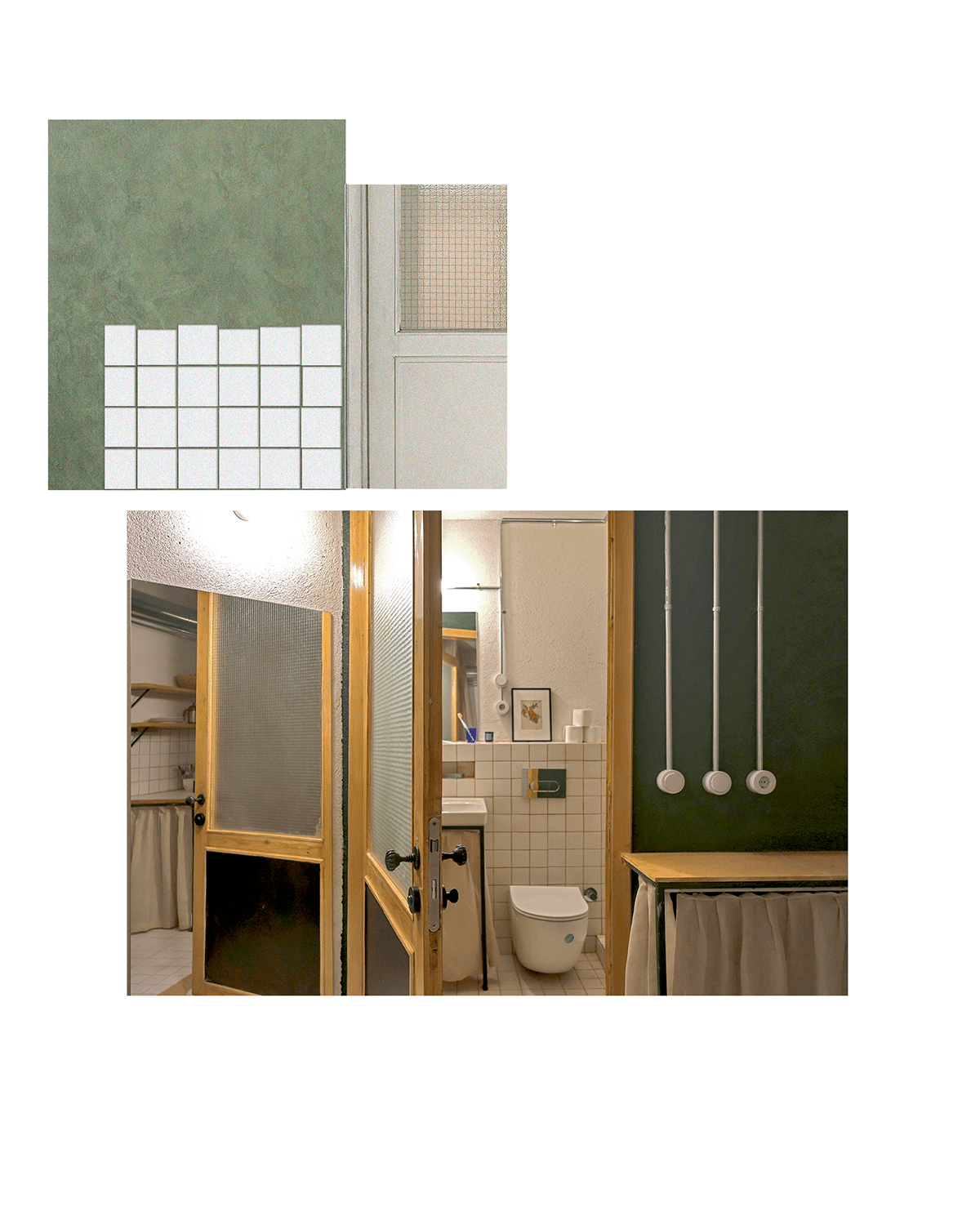
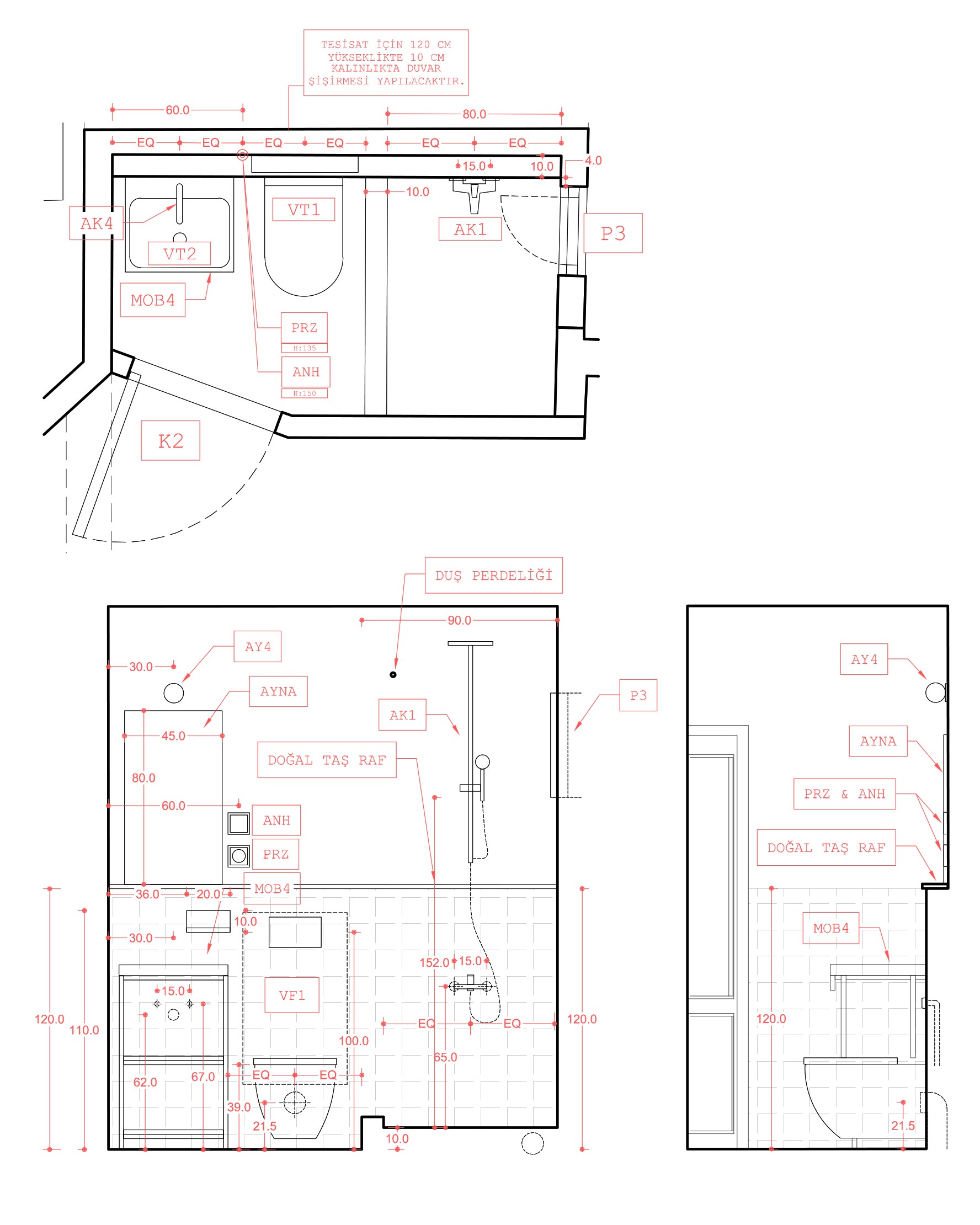
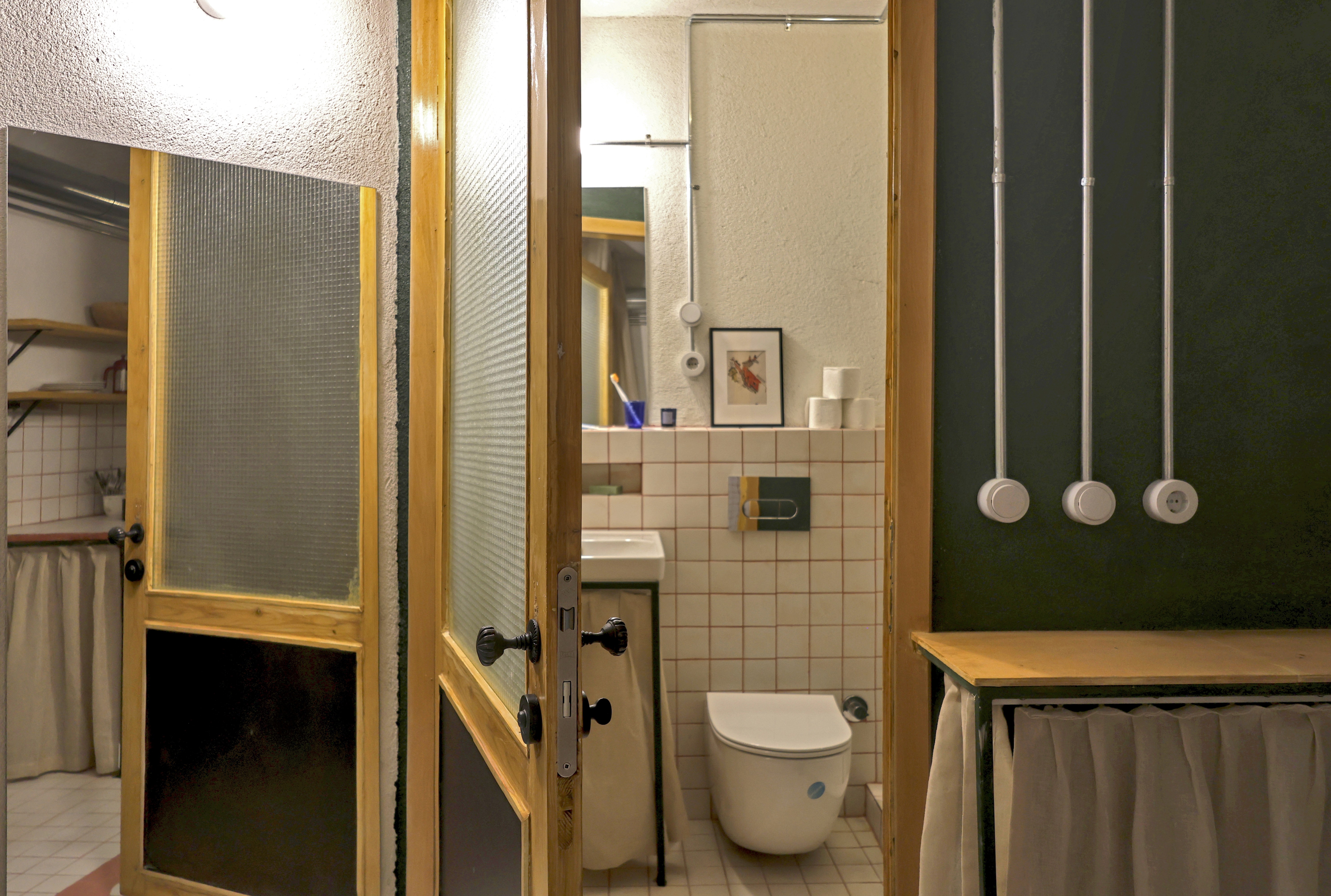
Traces of former walls remain visible across floors, walls, and ceilings, quietly outlining the apartment’s previous layout. These marks allow the current inhabitant to engage with the space as something layered rather than fixed. New additions, the bathroom enclosure, textile partitions, and the widened opening toward the garden, are clearly distinguished, making each intervention legible. Untouched structural elements remain in their natural state, completing the architectural reading key of the space.
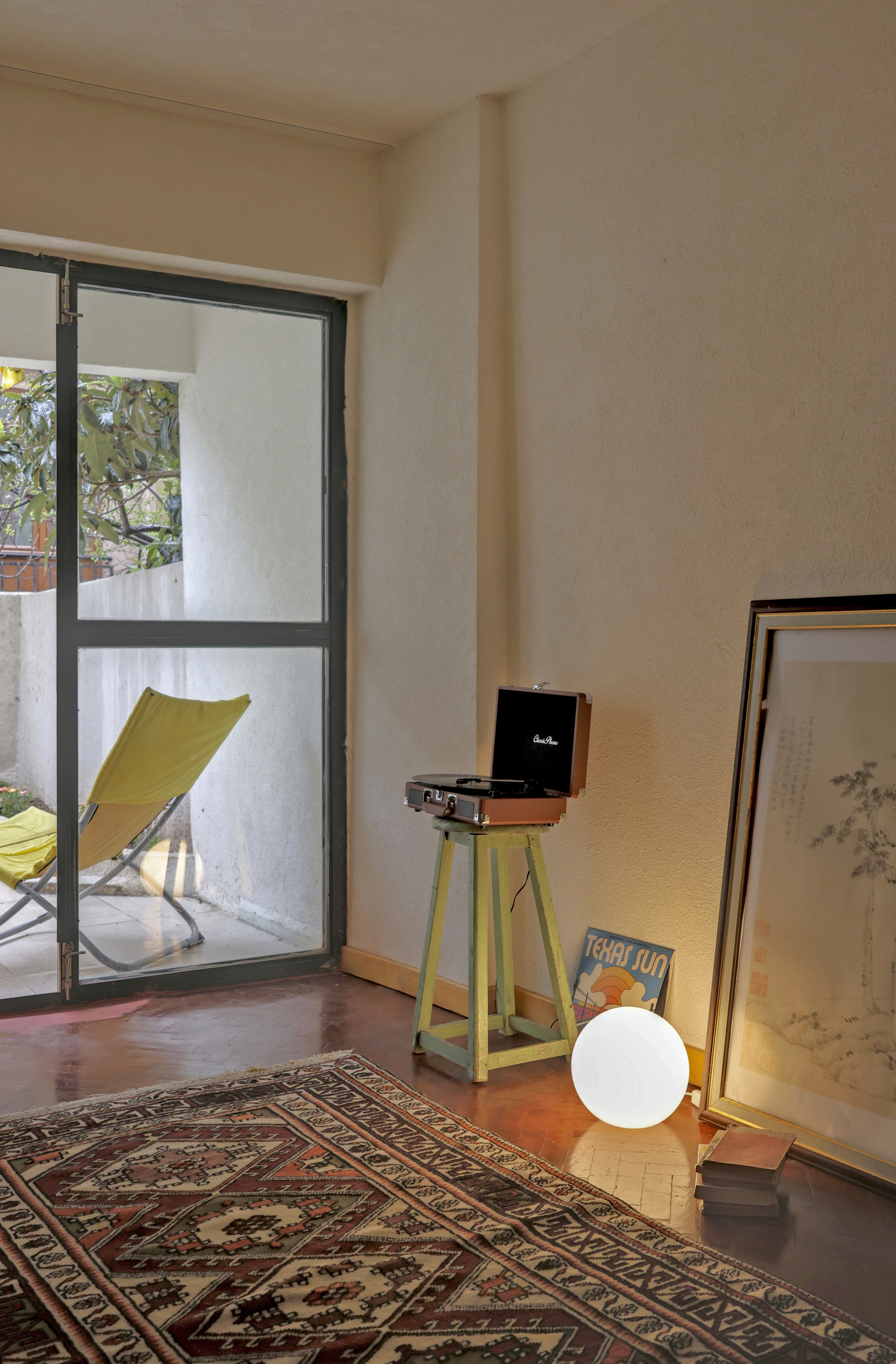
This approach extends to the material fabric of the apartment. Original wooden doors and windows were carefully restored, then repositioned within the new layout. The existing parquet flooring was repaired and refinished, preserving its continuity as a surface that carries both past use and present life. Through these decisions, the project maintains a delicate balance between preservation and change.
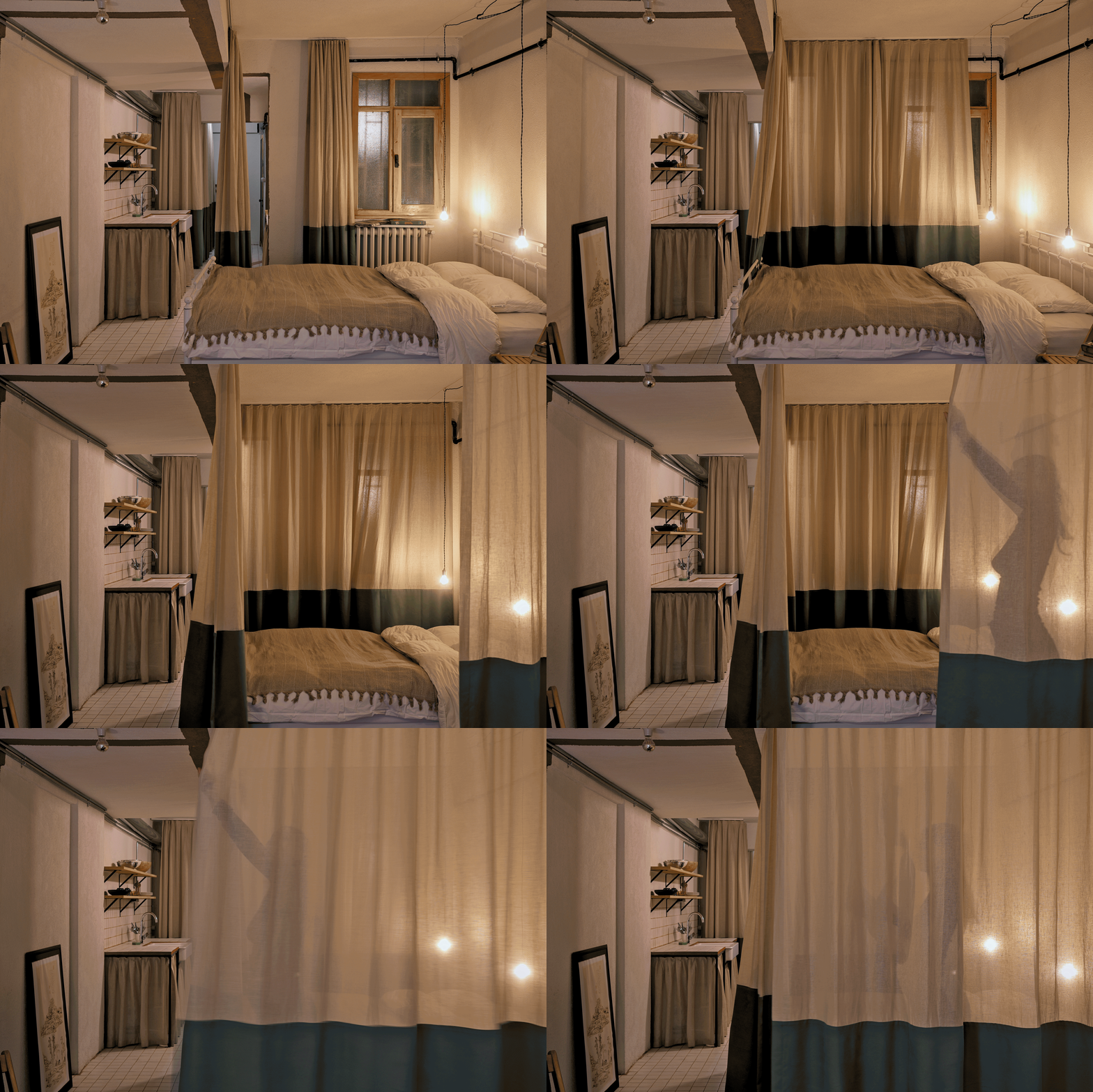
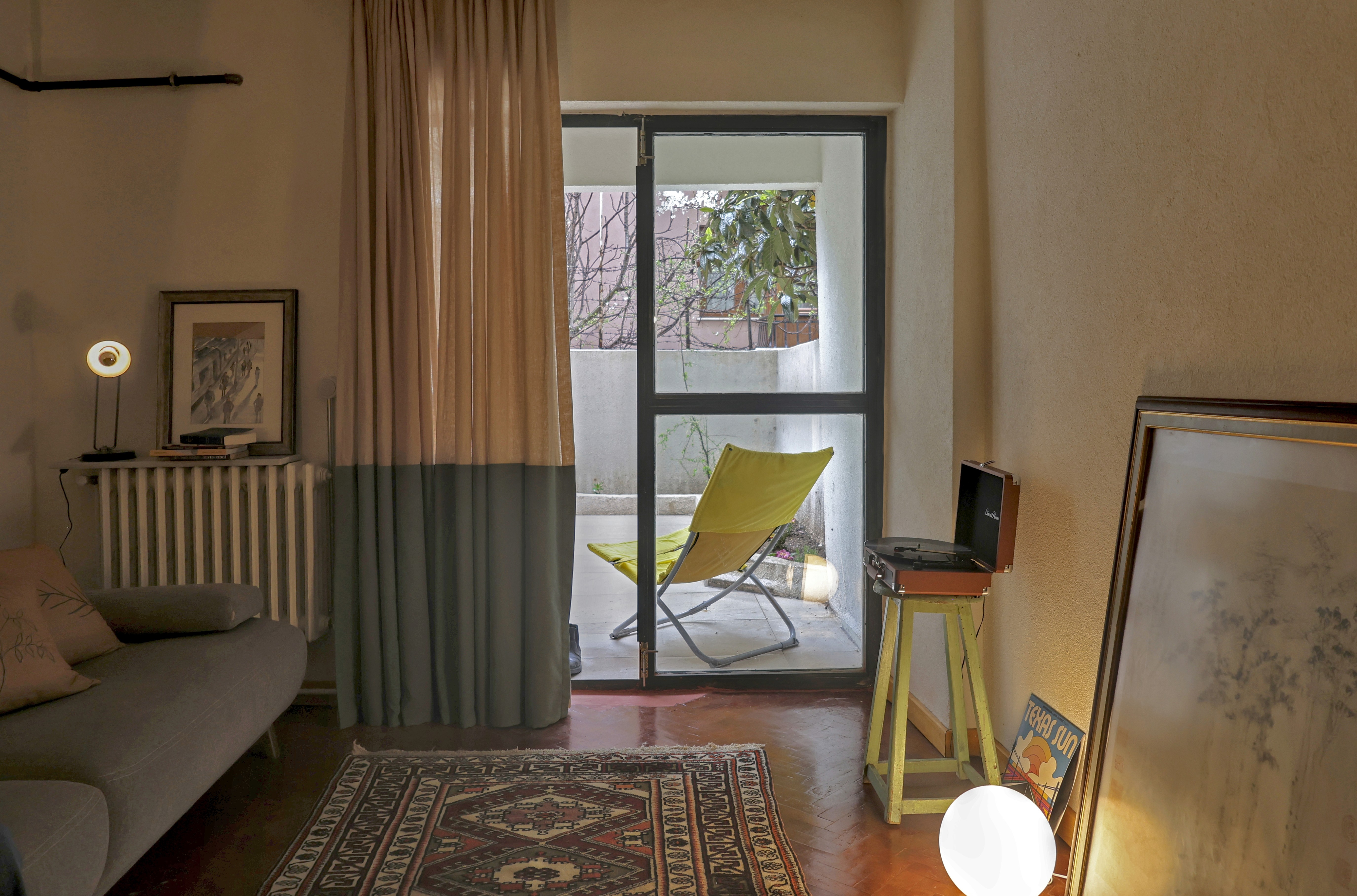
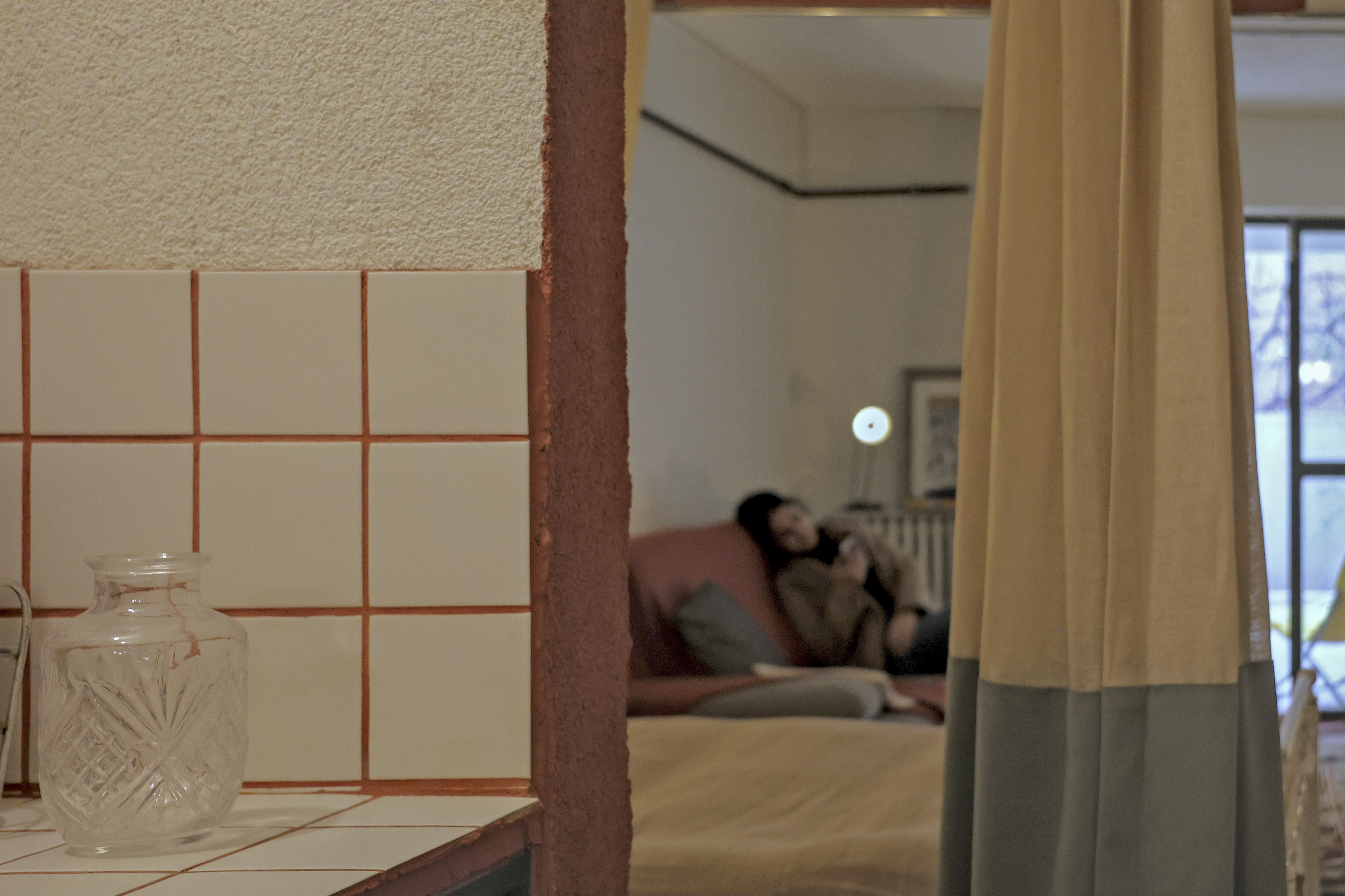
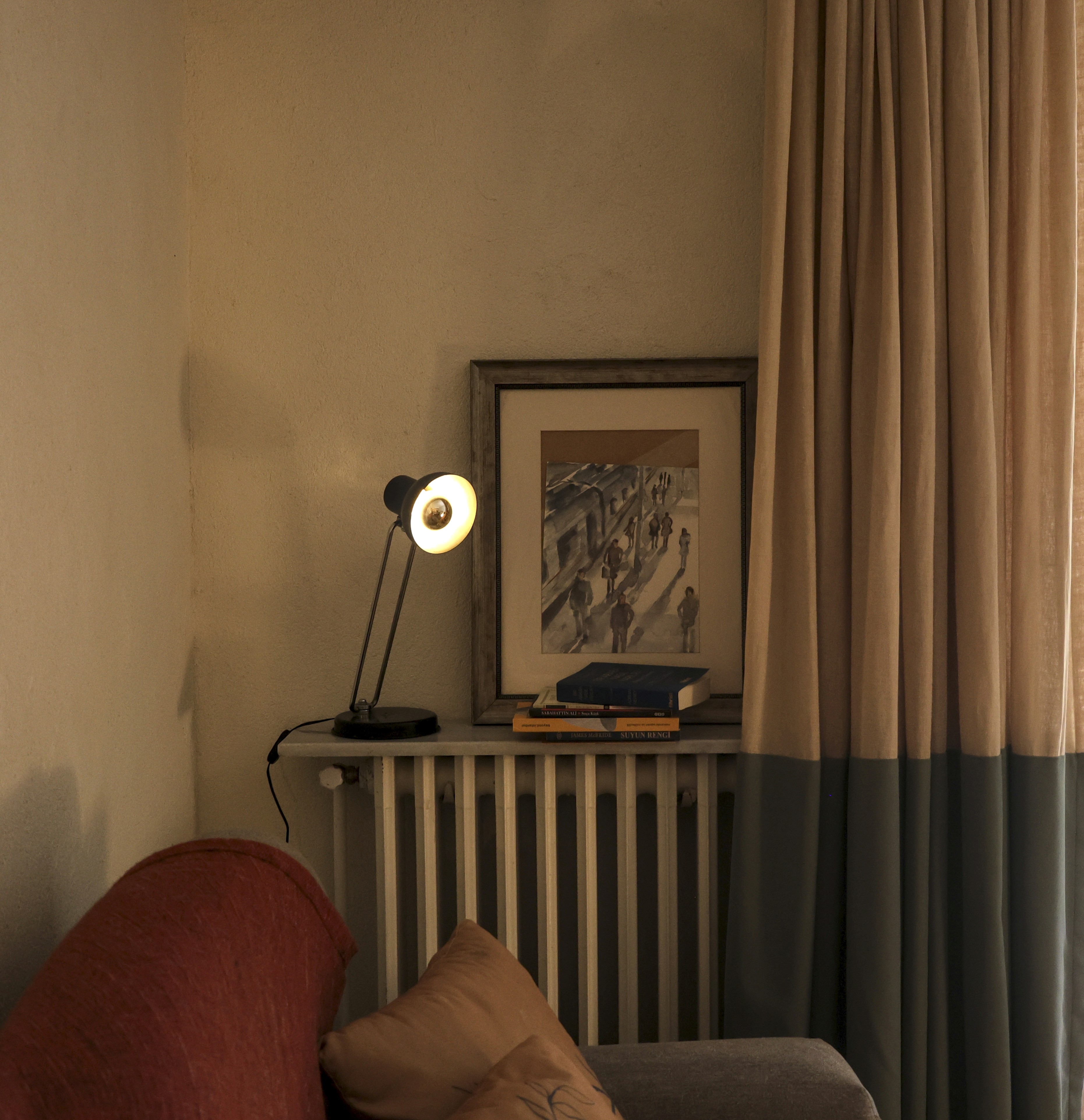
Given the limited size of the apartment, fixed partitions were kept to a minimum. Instead, curtains are used to define zones, introducing a softer and more adaptable spatial organization. Sleeping, storage, and wardrobe areas can be enclosed or opened as needed, allowing the space to shift between unity and separation. The former corridor, once an inefficient leftover space, has been reimagined as a linear kitchen, transforming circulation into function.
Reconnecting the apartment with its garden was another key move. The enclosed volume in front of the façade was removed, and the opening toward the exterior was expanded. This simple intervention allows light, air, and greenery to enter more freely, visually extending the interior beyond its physical limits.
Ultimately, the project does not seek to overwrite what was there before. Instead, it works through addition, subtraction, and careful exposure. What emerges is a space where past and present coexist, an apartment that is not only more livable, but also more aware of its own history.